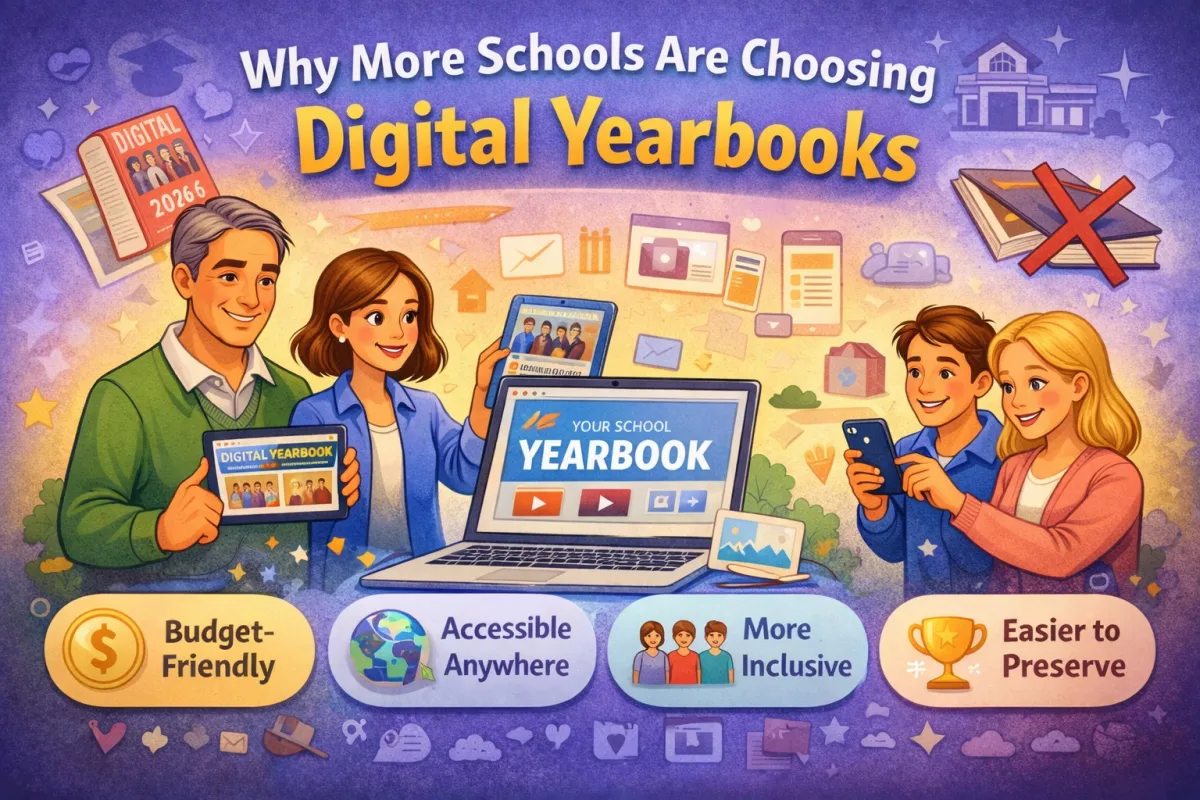
Why Digital Yearbooks Are Becoming the Preferred Choice for Schools
Yearbooks have always been a meaningful way to capture a school year—friendships, achievements, traditions, and milestones. But the way schools create and share those memories is changing fast. More districts and campuses are moving away from print-only yearbooks and choosing digital yearbooks (and mobile-friendly online yearbooks) because they’re more accessible, more flexible, and often easier to manage.
Here’s why digital yearbooks are quickly becoming the preferred choice for schools—and how they can strengthen school culture while reducing logistical headaches.
What Is a Digital Yearbook?
A digital yearbook is an online version of a yearbook that can be created, published, and shared through the web (and often through mobile devices). Instead of relying solely on printed copies, schools can give students and families access to a yearbook anytime, anywhere—without worrying about shipping delays, missing books, or limited inventory.
Many digital yearbooks also support richer content than print, like:
Video highlights and event clips
More photos (without page-limit constraints)
Interactive links and sections
Mobile access for families on the go
1) Digital Yearbooks Are More Accessible for Every Family
One of the biggest reasons schools choose digital is simple: access.
Printed yearbooks can be hard to distribute and easy to miss. Students move. Families change addresses. Some parents can’t attend pickup events. And if a student loses their book, it’s usually gone for good.
Digital yearbooks help solve that by offering:
Anywhere access (home, work, grandparents’ house, anywhere with internet)
Mobile-friendly viewing for busy families
Fewer barriers for families who can’t pick up in person
This improves equity and ensures more families can actually enjoy what the school created.
2) Schools Can Include More Students, More Moments, and More Stories
Print yearbooks have limitations:
A set number of pages
Strict design space
Higher costs when adding pages
Tough choices about what gets included
Digital yearbooks reduce those constraints. Schools can add:
More club photos, sports highlights, and candid shots
More student recognition (not just “top” groups)
More event coverage—without cutting something else
In practice, that means digital yearbooks can better represent the full school community, not just a portion of it.
3) Digital Supports Today’s Student Expectations (Mobile-First)
Students live on their phones. They share photos, watch short videos, and expect content to be easy to access and quick to navigate.
A mobile yearbook meets students where they already are. It’s not about replacing tradition—it’s about making the yearbook format feel relevant again.
When yearbooks are easier to view and share, schools often see:
Higher student participation in submissions
More excitement around events and “featured moments”
Greater engagement across grade levels
4) Digital Yearbooks Reduce Common Logistics and Production Problems
Ask any yearbook advisor: print production can be stressful.
Schools deal with:
Ordering deadlines and rush fees
Shipping delays and damaged boxes
Distribution day chaos
Incorrect quantities (too many or too few)
Digital yearbooks remove many of those pain points. With an online platform, schools can streamline creation and publishing—and spend less time managing physical inventory and more time capturing a great year.
5) They Can Be More Cost-Effective and Budget-Friendly
Budgets matter. And schools are under constant pressure to do more with less.
While pricing models vary, digital yearbooks often reduce or eliminate costs tied to:
Printing and paper
Shipping and handling
Reprint requests
Storage and distribution logistics
Even for schools that still offer print copies, adding a digital version can provide flexible options for families and reduce pressure to over-order.
6) Digital Yearbooks Make Sharing and Community Connection Easier
A yearbook isn’t just for students. Parents, guardians, grandparents, and alumni love being able to see school memories too.
Digital makes sharing simpler and more inclusive:
Families can view and revisit school memories anytime
Schools can spotlight achievements more widely
Community engagement can extend beyond one “yearbook day”
For administrators, that’s not just a nice-to-have—it supports stronger community ties and school pride.
7) Digital Yearbooks Are Easier to Preserve Long-Term
Printed yearbooks are sentimental, but they aren’t always durable:
They can be lost, damaged, or thrown away
They take up physical space
They’re hard to duplicate
Digital formats are easier to preserve and revisit, especially when schools use a platform designed for long-term access. That matters for:
Graduating students and families
Alumni communities
Staff who want to look back on school history
Schools building long-term culture and tradition
When a Print Yearbook Still Makes Sense (And How Digital Can Complement It)
Some schools will always want print—and that’s completely valid. Print yearbooks have a strong emotional appeal, and many families love having a physical keepsake.
But it doesn’t have to be either/or.
Many schools are choosing a hybrid approach:
Print yearbooks for families who want them
Digital access for inclusion, sharing, and longevity
That approach gives schools the best of both worlds: tradition plus modern access.
How to Know If Your School Is Ready for a Digital Yearbook
A digital yearbook is usually a strong fit if your school wants to:
Increase student participation
Improve access for families
Reduce distribution stress
Include more content without page restrictions
Offer a modern experience students actually use
If any of those goals matter to your campus, digital is worth serious consideration.
Final Thoughts: Digital Yearbooks Align With How Schools Operate Today
Schools are adapting to a more connected, more mobile, and more digital world. Yearbooks are following the same shift—because schools want solutions that are accessible, inclusive, manageable, and future-friendly.
A digital yearbook helps schools capture what matters—and share it in a way today’s families can actually enjoy.
FAQ
Are digital yearbooks secure?
Most reputable online yearbook platforms offer privacy controls and permission settings. Schools should choose a provider that prioritizes student data safety and access management.
Do digital yearbooks replace printed books?
They can, but they don’t have to. Many schools offer digital alongside print to improve access and reduce production pressure.
Will families still value a digital yearbook?
Yes—especially when it’s easy to access, mobile-friendly, and includes richer content like more photos and school highlights.
Call to Action
If your school is exploring a digital yearbook (or a print + digital option), Pixelyearbooks can help you create a modern yearbook experience that’s easy to build and easy to share.
Ready to see what a digital yearbook could look like for your school?
Explore Pixelyearbooks and request a demo.
